
Quick Answer
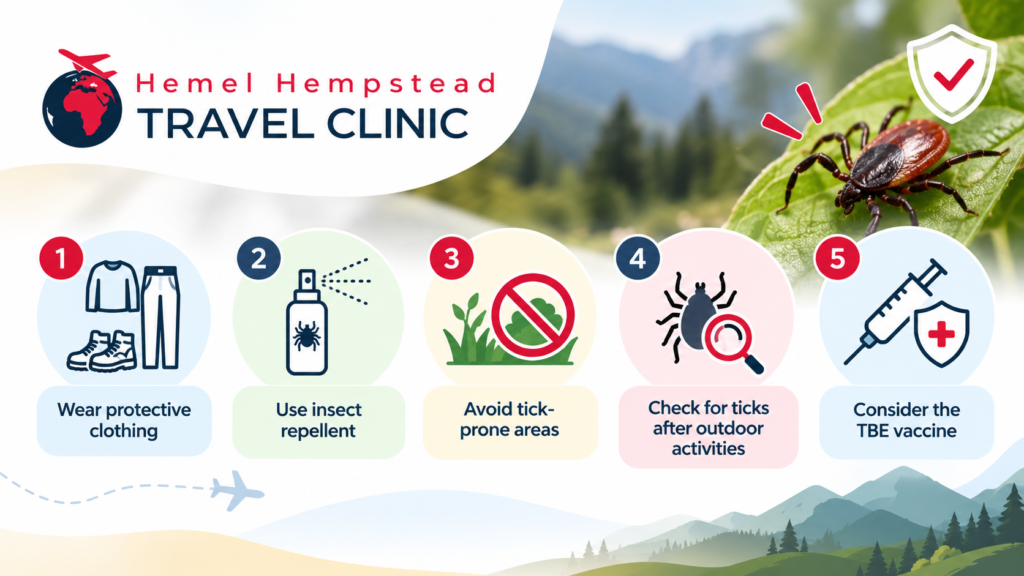
Travellers visiting tick-borne encephalitis (TBE) risk areas should reduce tick exposure by wearing covering clothing, using effective insect repellent, staying on clear paths and checking their skin regularly. Remove attached ticks promptly with fine-tipped tweezers or a tick-removal tool. Some higher-risk travellers should also consider TBE vaccination before departure.
Introduction
Hiking through forests, camping near lakes or exploring rural parts of Europe and Asia can be a highlight of any trip. However, these environments can also bring you into contact with ticks.
Ticks are small parasites that attach to the skin and feed on blood. In some parts of Europe and Asia, infected ticks can transmit tick-borne encephalitis (TBE), a viral infection that can occasionally affect the brain and nervous system.
Understanding a few practical tick safety tips for travellers can significantly reduce your chances of being bitten. Vaccination may also be appropriate for people spending substantial time outdoors in TBE-risk areas.
At Hemel Hempstead Travel Clinic in Boxmoor, travellers can receive destination-specific advice and TBE vaccination when appropriate. The clinic currently offers the Tick-Borne Encephalitis vaccine alongside other travel vaccinations.
Key Takeaways
- TBE occurs in parts of Europe, Russia and Asia.
- Tick exposure is more likely in woodland, grassland, forest edges and some parks.
- Covering your skin can reduce the chance of a tick bite.
- Use an effective insect repellent on exposed skin.
- Check your skin, hair and clothing after outdoor activities.
- Remove attached ticks promptly and correctly.
- TBE vaccination may be recommended for travellers whose activities increase their risk.
- Vaccination does not replace tick-bite prevention.
What Is Tick-Borne Encephalitis?
Tick-borne encephalitis is a viral infection mainly transmitted through the bite of an infected tick.
TBE occurs across parts of central, northern and eastern Europe, Russia and areas of Asia. Ticks that can transmit the virus commonly live around woodland, forest edges, grassy areas, riverside meadows and shrub-covered environments. They can also occur in parks and gardens.
Most infections cause no symptoms or only mild illness. However, some people develop flu-like symptoms followed by a more serious infection affecting the brain or spinal cord.
For this reason, prevention matters particularly for travellers planning activities that increase contact with tick habitats.
Who Is Most at Risk in TBE Zones?
Travellers who spend substantial time outdoors in affected areas have the greatest exposure to ticks.
Your risk depends on your destination, season and activities rather than simply visiting a particular country.
People who may have higher exposure include:
- Hikers and trekkers
- Campers
- Cyclists using rural or forest trails
- Hunters
- Forestry or agricultural workers
- Travellers doing fieldwork
- People staying for long periods in rural areas
TravelHealthPro notes that outdoor activities in woodland and forested areas can increase TBE risk. In Europe, ticks are generally more active from early spring through late autumn, although the exact season varies by location.
Where Do Ticks Usually Live?
Ticks are commonly found in vegetation where they can attach to people or animals passing nearby.
You do not need to be deep inside a forest to encounter ticks. They may live in long grass, woodland edges, bushes, riverside areas, gardens and some urban parks.
Ticks cannot jump or fly. Instead, they wait on vegetation and attach when a person or animal brushes past.
Therefore, staying in the centre of marked walking paths can reduce contact with plants where ticks may be waiting.
What Should You Wear in a Tick-Risk Area?
Covering exposed skin makes it harder for ticks to attach.
When walking through grassy or wooded environments, consider wearing:
- Long trousers
- Long-sleeved tops
- Closed shoes or walking boots
- Socks that cover the ankles
- Light-coloured clothing
Light-coloured clothing makes dark ticks easier to spot before they reach the skin.
When appropriate, tucking trousers into socks can provide additional protection, particularly when walking through long grass or dense vegetation.
The NHS recommends wearing long trousers and long sleeves and choosing light-coloured clothing so ticks are easier to notice.
How Should You Check Yourself for Ticks?
Check your body, clothing and hair after spending time in areas where ticks may be present.
Ticks can be extremely small and their bites are often painless. As a result, you may not realise that one has attached unless you actively look.
Pay particular attention to:
- Behind the knees
- Around the waist
- Groin area
- Armpits
- Around and behind the ears
- Hairline and scalp
- Ankles
- Skin folds
Check children carefully after outdoor activities as well.
It is also sensible to inspect clothing and brush off any crawling ticks before they reach your skin.
What Should You Do If You Find an Attached Tick?
Remove an attached tick as soon as possible using fine-tipped tweezers or a proper tick-removal tool.
The NHS recommends the following technique:
- Grasp the tick as close to the skin as possible.
- Pull upwards slowly and firmly.
- Avoid squeezing or crushing the tick.
- Dispose of it once removed.
- Clean the bite with antiseptic or soap and water.
Do not panic if you find a tick. The overall chance of becoming ill following a tick bite remains low, but correct and prompt removal is important.
Before, During and After Outdoor Activities
A simple routine can make tick protection easier.
Before Going Outdoors | During Your Activity | After Returning |
Apply insect repellent | Stay on clear paths | Check your skin |
Wear long trousers | Avoid brushing through vegetation | Check your hair |
Choose light clothing | Keep skin covered | Inspect clothing |
Pack a tick-removal tool | Reapply repellent as directed | Remove ticks promptly |
Know local TBE risk | Avoid long grass where possible | Monitor for symptoms |
These measures are useful even if you have received a TBE vaccine.
Do You Need a TBE Vaccine?
Not every traveller needs a TBE vaccine, but vaccination should be considered when your destination and activities create a meaningful risk of exposure.
Vaccination is particularly relevant for travellers spending time in affected rural or forested areas, especially those hiking, camping, hunting, carrying out fieldwork or working outdoors.
TravelHealthPro recommends considering vaccination for people living in TBE-risk areas, travellers at risk from their planned activities and certain occupational groups.
Hemel Hempstead Travel Clinic offers the Tick-Borne Encephalitis vaccine and can review your destination, duration of stay and planned activities before advising whether vaccination is appropriate.
How Early Should You Get the TBE Vaccine?
Plan your vaccination well before travel whenever possible.
The usual TBE vaccination course uses three doses. TravelHealthPro lists the standard schedule as the first dose on day 0, the second dose between one and three months later, and a third dose 5–12 months after the second.
For people travelling sooner, an accelerated option may allow the second dose two weeks after the first. The first two doses provide protection for the ongoing tick season in most recipients.
The NHS advises travellers to start early and states that at least two injections, given at least two weeks apart, are needed for travel protection.
Therefore, arranging your travel-health consultation several weeks before departure gives you more flexibility.
TBE Vaccination vs Tick-Bite Prevention
Vaccination and tick avoidance work together rather than replacing each other.
The TBE vaccine helps protect specifically against tick-borne encephalitis. However, ticks can transmit other infections as well.
For example, Lyme disease is another tick-borne infection, but the TBE vaccine does not protect against it.
This means vaccinated travellers should still:
- Wear protective clothing.
- Use insect repellent.
- Check for ticks.
- Remove attached ticks promptly.
TravelHealthPro specifically advises tick-bite prevention for everyone travelling in risk areas, regardless of whether they have received TBE vaccination.
What Symptoms Can TBE Cause?
Most people infected with TBE virus have no symptoms, but some develop a flu-like illness and a small number develop serious neurological disease.
Early symptoms may include:
- High temperature
- Headache
- Tiredness
- Muscle aches
- Feeling sick
In some people, symptoms improve and then a more serious phase develops involving the brain or nervous system.
Severe symptoms can include a stiff neck, severe headache, confusion, seizures, sensitivity to light or weakness.
When Should You Seek Medical Help After a Tick Bite?
Seek medical advice if you become unwell after a tick bite or after visiting a tick-risk area.
The NHS advises requesting an urgent GP appointment or contacting NHS 111 if, after a tick bite or recent visit to an area where ticks occur, you develop flu-like symptoms or a circular rash.
Call 999 or go to A&E for severe neurological symptoms such as:
- A stiff neck with a severe headache
- Seizures
- Sudden confusion
- Slurred speech
- Weakness or loss of movement
- Severe sensitivity to light
Always tell the healthcare professional about your recent travel and possible tick exposure.
How Can Hemel Hempstead Travel Clinic Help?
Hemel Hempstead Travel Clinic can assess your itinerary and advise whether TBE vaccination is appropriate for your trip.
The clinic provides personalised travel-health advice based on your destination, length of stay and planned activities. Its current vaccination services include the Tick-Borne Encephalitis vaccine, Japanese Encephalitis, Rabies, Yellow Fever, Hepatitis A, Typhoid and other travel vaccines.
Hemel Hempstead Travel Clinic
49A St John’s Road
Boxmoor
Hemel Hempstead
If your trip includes hiking, camping, cycling or outdoor work in a TBE-risk region, arranging a consultation before departure gives you time to review vaccination and tick-bite prevention.
People Also Ask
What is the best way to prevent tick bites while travelling?
Wear covering clothing, use effective insect repellent, stay on clear paths and check your skin and clothing after outdoor activities.
Where are TBE ticks found?
TBE occurs in parts of Europe, Russia and Asia. Risk varies by country and region, so check destination-specific travel guidance before travelling.
Can you get TBE from one tick bite?
Yes, an infected tick can transmit TBE through a bite, although the overall risk from any individual tick bite is low.
Do I need a TBE vaccine for Europe?
Not automatically. Vaccination depends on the destination and whether your activities, such as hiking or camping in affected areas, increase exposure.
How do I remove a tick safely?
Use fine-tipped tweezers or a tick-removal tool, grasp it close to the skin and pull upwards slowly and firmly.
Does TBE vaccine prevent Lyme disease?
No. The TBE vaccine protects against TBE, not Lyme disease.
Conclusion
Travelling through a TBE-risk area does not mean you need to avoid outdoor activities, but good tick safety habits are essential.
Cover your skin, use insect repellent, stay on clear paths and check yourself carefully after hiking, camping or spending time in long grass. If you find an attached tick, remove it promptly with fine-tipped tweezers or a suitable tick-removal tool.
Travellers planning regular or prolonged outdoor exposure in affected areas may also benefit from TBE vaccination.
For destination-specific advice and Tick-Borne Encephalitis vaccination in Hemel Hempstead, contact Hemel Hempstead Travel Clinic before your trip.
Frequently Asked Questions
In many European TBE areas, ticks are most active from spring through autumn, although timing varies by location.
Yes. Ticks can occur in some parks and gardens as well as rural environments.
Covering your legs with long trousers reduces exposed skin and can help prevent tick bites.
Repellent can reduce the chance of ticks attaching, especially when combined with protective clothing.
Yes. The NHS advises checking both skin and hair after being outdoors in tick-risk areas.
Remove it as soon as you notice it using the recommended technique.
Rarely, infection can occur through unpasteurised milk or dairy products from infected animals.
An accelerated schedule may be possible. Speak with a travel-health professional as soon as possible.