Quick Answer
Humanitarian workers abroad need health preparation before travel because they may face infection risks, limited healthcare access, animal exposure, unsafe water, injury risks and long working hours. A travel health consultation can check vaccines, malaria protection, medical history, medicines, first-aid needs and destination-specific precautions before deployment.
Introduction
Humanitarian workers abroad often travel to challenging environments, including disaster zones, rural communities, refugee settings or areas with limited healthcare. These trips may involve long stays, close community work, unpredictable accommodation and higher exposure to infectious diseases.
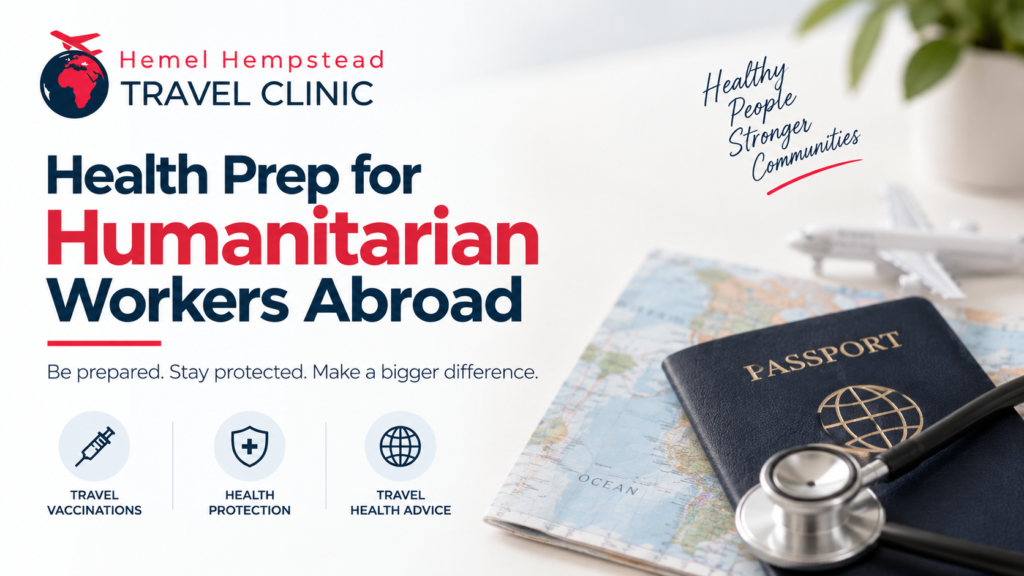
Good health preparation helps reduce avoidable illness and supports safer work overseas. Hemel Hempstead Travel Clinic provides occupational health support and travel vaccination advice for people working locally or abroad.
For general vaccine guidance, you can also read the official NHS travel vaccinations advice.
Key Takeaways
- Humanitarian workers abroad should book travel health advice early.
- Vaccine needs depend on destination, role, duration and living conditions.
- Hepatitis A, typhoid, hepatitis B, rabies and DTP may be relevant.
- Malaria tablets may be needed for some destinations.
- First-aid planning and medicine checks are important before deployment.
- Animal bites, unsafe water and blood exposure need careful prevention.
- Hemel Hempstead Travel Clinic can provide tailored pre-travel advice.
Why Do Humanitarian Workers Abroad Need Extra Health Prep?
Humanitarian workers abroad need extra health prep because their work can involve higher exposure than standard holiday travel.
They may support communities after floods, conflict, disease outbreaks or infrastructure disruption. Clean water, reliable food storage, safe accommodation and urgent medical care may not always be easy to access.
Health prep should therefore look at the full trip, not only the country name.
What Vaccines May Humanitarian Workers Need?
Vaccine advice depends on the destination, work role and previous vaccine history.
Common vaccines to discuss include hepatitis A, typhoid, hepatitis B, DTP, rabies, meningitis ACWY, cholera, yellow fever and Japanese encephalitis. Not every worker needs every vaccine, so a risk assessment is important.
Hemel Hempstead Travel Clinic offers travel vaccines such as Hepatitis A, Typhoid, Hepatitis B and Rabies.
Which Health Risks Should Workers Plan For?
Humanitarian workers should plan for infections, bites, injuries, heat illness and medicine access.
Risk Area | Why It Matters | Preparation |
Food and water illness | Unsafe water or poor sanitation | Vaccines, hygiene advice |
Malaria | Mosquito exposure in risk areas | Tablets and bite prevention |
Rabies | Dogs, cats, monkeys or bats | Vaccine advice and bite plan |
Blood exposure | Healthcare, rescue or field work | Hepatitis B protection |
Wounds and injuries | Outdoor or manual work | First-aid kit and tetanus check |
Long stays | More exposure time | Early travel consultation |
Preparation should be based on where you will sleep, work, travel and receive care if unwell.
Do Humanitarian Workers Need Malaria Protection?
Some humanitarian workers may need malaria tablets if travelling to a malaria-risk area.
Malaria protection depends on the exact destination, rural exposure, season, trip length and accommodation. Tablets do not give complete protection, so mosquito-bite prevention is still essential.
Travellers should use insect repellent, cover skin during peak biting times, sleep in screened or air-conditioned rooms where possible and use mosquito nets if needed. Hemel Hempstead Travel Clinic provides antimalarial protection advice.
Why Is Rabies Advice Important?
Rabies advice is important because animal exposure can happen unexpectedly during field work.
Dogs, cats, monkeys and bats may be present near communities, camps or accommodation. A bite, scratch or saliva contact with broken skin should be washed immediately and assessed urgently.
Pre-travel rabies vaccination may be considered for humanitarian workers abroad, especially if they are staying in remote areas or working with animals.
What Should Be in a Health Preparation Checklist?
A health preparation checklist should cover vaccines, medicines, documents and emergency planning.
Before deployment, check:
- Routine UK vaccines are up to date.
- Destination-specific vaccines are reviewed.
- Malaria risk and tablets are assessed.
- Regular medicines are packed legally and safely.
- First-aid supplies are suitable for the role.
- Travel insurance covers humanitarian work.
- Emergency contacts and clinic access are known.
- Any medical conditions are reviewed before travel.
A written plan is useful if you are travelling as part of a charity, NGO, faith group, school project or emergency-response team.
When Should You Book Travel Health Advice?
Book travel health advice 4 to 6 weeks before travel where possible.
Some vaccines need more than one dose, and malaria tablets may need planning before arrival in a risk area. Last-minute workers should still seek advice, because useful protection and prevention steps may still be possible.
How Can Hemel Hempstead Travel Clinic Help?
Hemel Hempstead Travel Clinic can provide personalised health preparation for humanitarian workers abroad.
The clinic offers occupational health services, travel vaccines, malaria advice and destination-specific support. Depending on your role, the clinic can help review risks linked to field work, remote travel, animal contact, blood exposure and long-stay travel.
The clinic is located at:
49A St John’s Road
Boxmoor
Hemel Hempstead
To prepare for deployment, visit the vaccines page or contact Hemel Hempstead Travel Clinic.
Common Misconceptions
One common misconception is that humanitarian workers only need vaccines for tropical countries. In reality, vaccine and medicine needs depend on the exact region, role and exposure risk.
Another myth is that charity or volunteer trips are low risk because the purpose is short term. Even short deployments can involve animal contact, unsafe water or limited medical care.
Some workers also think vaccines replace prevention. Safe food choices, hand hygiene, bite prevention and emergency planning still matter.
People Also Ask
What vaccines do humanitarian workers abroad need?
They may need vaccines such as hepatitis A, typhoid, hepatitis B, rabies, DTP and others depending on destination and role.
Do volunteers need travel health advice?
Yes. Volunteers should get travel health advice because work settings may involve different risks from holidays.
Do humanitarian workers need malaria tablets?
They may need malaria tablets if travelling to a malaria-risk area. Advice depends on exact destination and activities.
Is rabies vaccine important for humanitarian workers?
It may be important if workers are visiting remote areas, staying longer or could be exposed to animals.
Where can I get travel health advice in Hemel Hempstead?
Hemel Hempstead Travel Clinic provides travel vaccines, malaria advice and occupational health support.
Conclusion
Humanitarian workers abroad need careful health preparation because their work may involve infection risks, remote settings, animal exposure, malaria risk and limited access to healthcare.
Hemel Hempstead Travel Clinic can review your destination, role, vaccine history and medical needs before deployment, helping you travel with better protection and clearer practical advice.
Medical notice: This article provides general travel-health information and does not replace personalised clinical advice.
FAQs
Book 4 to 6 weeks before travel where possible, especially if multiple doses are needed.
Yes. A clinic can still advise on vaccines, malaria tablets and practical risk reduction.
It may be recommended if there is possible exposure to blood or body fluids.
Yes. A suitable first-aid kit is important, especially where medical care may be limited.
Yes. Workers should check that their policy covers volunteering, aid work or field work.
Yes. Tablets reduce malaria risk but do not prevent mosquito bites.
Wash the wound with soap and water and seek urgent medical care locally.
Yes. The clinic provides occupational health and travel health support for people working abroad.